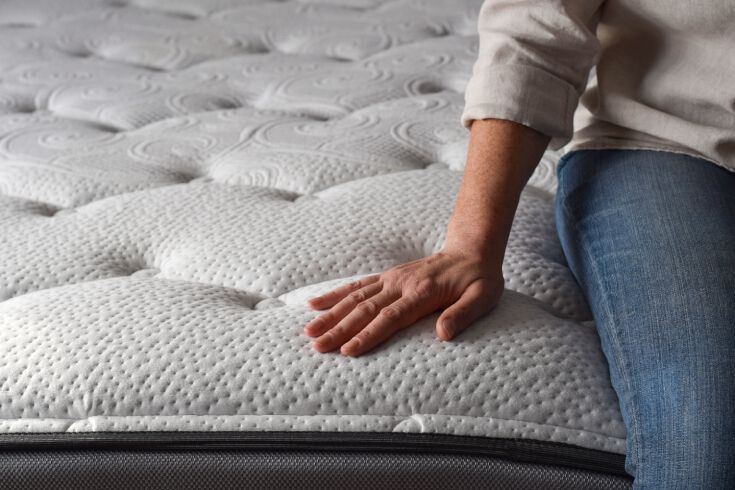

Cooling mattress covers and air channels do work, within limits. A cool-to-the-touch cover really does feel cooler when you first lie on it, but that feeling evens out as the fabric warms to you. Air channels and open builds help heat and moisture move, mostly when you sweat. The whole build, your bedding and your room decide more than any cover.
| Part | What it can do | What it can't do | How to check |
|---|---|---|---|
| Cool-to-the-touch cover fabric | Feel cool at first contact, and again when you roll onto a spot you haven't warmed | Stay that cool once it has warmed to your skin, or make you cooler than the air around the bed | Lie still for several minutes, then notice again (details) |
| Breathable cover knit | Let heat, air and moisture leave; thinner, more open fabrics do this more easily | Work through a thick layer laid on top of it | Ask whether the cool feel is in the fiber, the knit or a finish (details) |
| Air channels and open coil cores | Give air a path through the mattress, which helps when you sweat | Do much when you're dry, or under a cover and sheet in one lab test of a very open mattress | Ask what sits under the cover (details) |
| A protector on top | Keep the mattress clean; some are described as breathable | Leave the cover's first touch unchanged, since the sheet and protector are what you touch | Test the bed with the protector you'll use (details) |
| A topper or pad on top | A pad adds a thin quilted layer; mattress toppers are thicker and change the feel as well as the temperature | Change the temperature without changing the surface you lie on; a cover mostly changes only the surface | Take it off for a night and compare (details) |
| Your bedding, room and air movement | In manikin tests, clothing and bedding mattered more for heat than the mattress; a fan on high cooled strongly | Cool you enough with a fan on low, in the same tests | Change one thing a night (details) |
Why a Cooling Cover Feels Cool, Then Evens Out
The cool touch is real, and it is strongest at first contact. A fabric feels cool when it starts cooler than your skin and pulls heat away fast; textile labs test this as "contact cool feeling", and fibers that conduct heat well give a stronger cool touch. Researchers describe it as a peak of heat flow at contact that then settles to a steady level. Rolling onto a part of the cover you haven't warmed brings the cool touch back.
That cool feel can come from the fiber itself, from how the fabric is knitted or woven, or from a finish added afterward. Textile researchers note that a finish-based cool feel is not guaranteed to last. Thinner, more open fabrics let heat and air through more easily.
What a Cover Can Still Do All Night
No cover without a power source can make you cooler than the air around the bed. What a breathable cover can keep doing is let moisture leave. That matters because humidity is one of the most important sources of heat stress during sleep: sweat cools you when it can evaporate, and humid conditions leave the skin wet. Some covers also add phase-change materials, which are a separate topic.
What Air Channels Can and Can't Do
Channels help air move, within limits, and what sits on top decides how much of that help reaches you.
They give air a path
Channels, perforations and open coil cores all aim to let air move through the mattress. They help heat and moisture leave; they don't chill anything.
One lab test shows the limits
In a lab test at the Technical University of Denmark, a very open, breathable mattress on a slatted frame made no real difference with a dry heated manikin. With simulated sweat, the bare material cooled the back until the moisture dried. With its own fabric cover on, the effect was small, and even a thin cotton sheet canceled it.
What sits underneath matters
Air moved through that mattress by rising warmth and body movement. The researchers expected a solid base, storage underneath or a regular mattress below to stop that flow.
Coils leave open space
Hybrid mattresses have a coil core with room for air. In one heated, sweating manikin test, a latex foam mattress set ran warmer and more humid next to the body than an innerspring mattress set. That is one test, not a rule for every foam or coil bed.
The takeaway
Channels help at the margin, mostly when you sweat. The cover, protector and sheet on top decide how much of that you feel.
Does a Mattress Protector Cancel the Cooling?
It can change what you feel, yes. A protector sits between you and the cover, under the fitted sheet, so the sheet and protector are what you actually touch. In the two-layer modeling study, the layer against the skin dominated the first-touch peak, while both layers together shaped the steady level.
Many add-ons sold as "cooling covers" are really protectors or pads. How freely a waterproof layer lets air and moisture vapor through varies by design. And in the Denmark test, even a thin cotton sheet canceled the small effect of the breathable mattress.
Keep the Protector, and Choose It Well
Keep one anyway, because its job is keeping the mattress clean; the warranty terms for your mattress are on Mancini's Sleepworld's warranty page. Choose one of the mattress protectors described as breathable, and try the bed with the exact protector and sheet you will use. Ask a Sleep Specialist to show you the ones described as breathable or cooling.
Find Where Your Heat Is Coming From
Change one thing a night and note how you wake. That shows whether the heat comes from your setup or your mattress.
- Lighten the top bedding. Swap a heavy duvet or extra blanket for something lighter, and leave everything else the same.
- Run a fan on high. Fans cool by speeding convective and evaporative heat loss. In UC Berkeley thermal-manikin tests, fans on high cooled strongly and on low not enough. A fan with minimal clothing and bedding gave about three times the cooling of the fan alone. The same tests suggest the mattress may matter less for heat than bedding, though a real person sinks further in than a manikin does.
- Cool the room. Standard sleep advice is to keep your bedroom quiet, cool and dark. Open a window or run the air conditioning if you have it.
- Try a lighter, breathable sheet. Thinner, more open fabrics let heat and air through more easily.
- Take off any extra pad or topper for a night. Keep the protector, and see whether that added layer made a difference.
- Read the result. Cooler after one of these? It was the setup. Still hot with light bedding and moving air? Look at the build: what sits under the cover, and how far you sink in. The value table and store test pick up from there.
If you sweat a lot, often sweat during sleep, or the sweating lasts a long time or can't be explained, that is a question for your doctor.
Is a Cooling Cover Worth Paying For?
It can be, once you know where your heat comes from.
| If this is you | Put your money here first | Why |
|---|---|---|
| Warm room or heavy bedding | Your room and bedding | Manikin tests point to bedding and clothing over the mattress, and a cool room is standard sleep advice |
| You like the mattress but the surface feels warm | A breathable protector or pad, tried with your own sheet | The layer against you shapes the first touch, and thinner, open fabrics breathe better |
| You sink deep into dense foam and wake damp | The build, not a cover | A real person sinks further than a manikin, so the mattress likely plays a bigger part; compare memory foam mattresses with coil builds lying down |
| You're buying a new mattress anyway | The whole build, with the cover judged last | A store test shows the first touch and how far you sink; the cover is one layer of many |
What you pay for in a cooling cover is the fiber, the knit, whether the cool feel is in the fiber or a finish, and the mattress it comes on. Judge it with the store test below and one question: what is under this cover? Keep expectations grounded: a 2024 systematic review found nine studies comparing sleepwear or bedding fibers and called the relationship complex and hard to compare.
How to Test Cooling in a Store
Test past the first touch. At a Mancini's Sleepworld location, one of 50+ locations across Northern California, you can lie on foam and hybrid builds from many brands side by side.
- Settle support first. Lie on a few firmness levels and find the one that holds you well. Cooling narrows the choice within that level; it never replaces it.
- Lie in your real sleep position. Bring your own pillow, and notice the first touch.
- Lie still for several minutes and notice again. This is the part a quick sit can't show you.
- Compare a foam and a hybrid from different brands. Bring the mattresses listed for cooling as a shortlist, then go back to the first bed.
- Ask a Sleep Specialist what sits under each cover. Solid foam, channeled foam and coils behave differently, and a person on the floor knows what is inside each model.
- Remember what a showroom can't show. It is cooler than a summer bedroom and you are dressed, so it shows the first touch and how far you sink, not a warm night. Picture the sheet and protector you will add at home.
Your Next Move, by Where the Heat Comes From
Take the result of the one-change-a-night test and find your line.
Cooler after lighter bedding, a fan or a cooler room
the heat was your setup. Keep that change before you spend on a cover.
Only one of you runs hot
a cover covers both sides of the bed, so set the top bedding per person instead, a lighter layer for the hot sleeper and a warmer one for a partner.
You like the mattress, but the surface runs warm
try a breathable protector or pad with your own sheet. Ask whether its cool feel is in the fiber or a finish, since a finish-based cool feel is not guaranteed to last, and follow the care label.
You're buying a new mattress anyway
run the store test on a foam and a hybrid, and choose on how each feels once the first touch has faded.
A new mattress still runs hot with light bedding and moving air
ask a Sleep Specialist to look at the build with you, starting with what sits under the cover and how far you sink in. Mancini's Sleepworld offers a comfort guarantee on eligible mattresses, with conditions. The current terms are on their returns page.