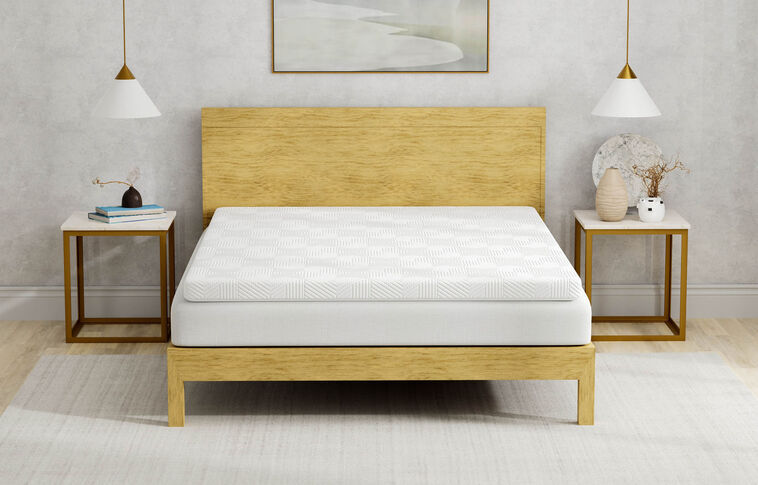

What Is a Mattress Topper and Do You Need One?
A mattress topper is a removable comfort layer, usually 2 to 4 inches thick, that sits on top of your existing mattress to change how it feels. The honest short answer to "do you need one?" depends on a single question: is your mattress still structurally sound but not quite comfortable, or is it actually worn out? A topper fixes the first problem. It cannot fix the second.
Table of Contents
- What a Mattress Topper Actually Does
- Topper or New Mattress? Make This Call First
- The Main Types of Mattress Toppers
- How to Choose a Topper by Your Goal
- When It's Really the Mattress
- Frequently Asked Questions
That distinction is the whole decision, so it's worth getting right before you spend a dollar.
What a Mattress Topper Actually Does
Think of a topper as a feel adjustment, not a repair. It's a slab of memory foam, latex, wool, down, or gel-infused foam that you lay over the mattress you already own and tuck under a fitted sheet. By adding a new surface, it can make a too-firm bed softer, add pressure relief at the shoulders and hips, or help a hot bed sleep cooler.
What it can and can't do is the part most guides skip:
| A topper can | A topper can't |
|---|---|
| Make a firm mattress feel softer (or a soft one feel a bit firmer) | Fix sagging, dips, or deep body impressions |
| Add pressure relief for side sleepers' shoulders and hips | Restore support once the mattress core is breaking down |
| Help a hot bed sleep cooler (with the right material) | Make a worn-out, 7-to-10-year-old mattress feel new |
| Extend the life of a mattress that's still in good shape | Replace a mattress that's causing you real, ongoing discomfort |
The reason a topper can't rescue a failing mattress is simple physics: a topper takes its shape from whatever is underneath it. Lay one over a sagging mattress and the sag comes right through, just with a softer surface on top. You end up paying for a comfort layer that's still sinking into the same valley. That's why the first real question isn't "which topper?" but "topper or new mattress?"
Topper or New Mattress? Make This Call First
Here's the test. A topper is the right move when the mattress is sound but the feel is off. A new mattress is the right move when the structure itself is going.
| If your mattress is... | The honest fix is... | Why |
|---|---|---|
| Too firm, too soft, or just not comfortable, but otherwise solid | A topper | You're adjusting feel, not repairing damage |
| Sleeping hot, while the support still feels fine | A topper (cooling material) | Surface temperature is a comfort-layer problem |
| Visibly sagging, with dips or deep body impressions | A new mattress | A topper can't lift a sag; it follows it |
| Roughly 7 to 10 years old and going downhill | A new mattress | The materials have broken down; a topper only masks it briefly |
| Causing persistent aches or waking you up night after night | A new mattress | Ongoing pain usually points to support failure, not surface feel |
| Fine, but you're renting or on a tight budget for now | A topper | A low-cost way to buy comfort and time |
What this means for you: if you can press on the mattress and feel a defined dip, or you've had it about a decade, a topper is money spent delaying the real fix. If the bed holds its shape and you just wish it felt different, a topper is exactly the tool.
If you read that and landed on "it's probably the mattress," that's not a dead end, it's the start of an easier decision. The fastest way to find what actually fits your body and sleep style is SleepMatch, our diagnostic that recommends a firmness based on how you sleep, online or in any store. You can also see what's out there by mattress type or read our full guide on how to shop for a mattress when you're ready to compare.
If a topper is the right call, the rest of this guide is for you.
The Main Types of Mattress Toppers
Toppers are sorted by material, and the material is what determines the feel. Here's how the common ones differ.
| Type | How it feels | Best suited to | Watch-out |
|---|---|---|---|
| Memory foam | Slow, deep contouring that hugs the body | Pressure relief, softening a firm bed | Can trap heat unless gel-infused |
| Latex | Springy, responsive, firmer support | Hot sleepers, firming up a too-soft bed | Heavier; natural latex costs more |
| Gel / gel-infused foam | Memory-foam contouring with a cooler surface | Sleepers who want the hug without the heat | Cooling is a surface effect, not magic |
| Wool | Soft, breathable, temperature-regulating | Hot sleepers who want softness, not deep sink | Adds plushness more than support |
| Down / feather | Plush, pillowy, like sleeping on a duvet | Adding softness only | Adds almost no support; compresses over time |
| Polyfoam (poly-blend) | Soft and light, feather-like without feathers | Budget shoppers, a plant- and animal-free soft layer | Lower-density versions wear faster |
A quick note on thickness: most toppers run 2 to 4 inches. Thicker isn't automatically better. Two inches is often plenty to firm up a soft bed, while side sleepers softening a firm bed usually want 3 inches or more to cradle the shoulder and hip without bottoming out.
One thing a topper is not: a mattress protector. A protector is a thin, often waterproof cover that guards against spills, sweat, and allergens; it doesn't change how the bed feels. A topper changes feel but offers little protection. You can use both, and many people do, with the protector going on first (right against the mattress) and the topper on top.
If you're sorting out that stack, our guide on whether to buy a protector if you have a topper covers it, and you can browse mattress toppers and protectors directly.
How to Choose a Topper by Your Goal
Once you know a topper is right, pick by the problem you're solving rather than by what's on sale. Four goals cover most people.
Your bed is too firm and you want pressure relief.
Reach for a memory foam topper in a soft-to-medium feel, around 3 inches if you sleep on your side. Memory foam contours closely, which is what takes the pressure off shoulders and hips on a hard surface. The trade-off is heat, so if you also run warm, look at a gel-infused version.
Your bed is too soft and you sink in too far.
Go the other direction with a firmer topper, latex or a high-density foam, around 2 inches. The goal here is to add a supportive surface that stops the sinking, not more plushness. Latex is responsive and won't swallow you the way soft memory foam can.
You sleep hot.
Material matters more than anything else. Latex and wool breathe and regulate temperature far better than standard memory foam, which tends to trap heat. If you love the memory-foam hug but hate waking up warm, a gel-infused foam is the compromise. For a hot-sleeper bed where the support is already gone, though, a cooling topper only treats the symptom, and a cooling mattress is the better long-term answer.
You're a side sleeper with shoulder or hip pressure.
Prioritize a medium memory foam topper, 3 inches or more, so it can cradle your contact points without you bottoming out onto the firm mattress beneath. If you weigh more, size up the firmness and thickness so you don't compress straight through it.
What this means for you: match the material to your single biggest complaint. Memory foam for pressure and softness, latex for support and cooling, wool for breathable softness, down for pure plush. Trying to solve every goal with one topper usually solves none of them well.
When It's Really the Mattress
A topper is a genuinely good fix for the right problem: a sound mattress that doesn't quite feel like you. It's lower cost, it's reversible, and it can buy a still-healthy mattress several more comfortable years.
But it's not a way to avoid a decision your mattress has already made for you. If the bed sags, if it's pushing a decade, or if it's leaving you achy and unrested, a topper is comfort spending that delays the real answer. In that case the better move is to find the mattress that actually fits how you sleep.
Take the SleepMatch quiz to get a personalized firmness recommendation in a few minutes, online or in store. Or visit any of our 50+ Mancini's Sleepworld locations across Northern California to feel the difference between firmnesses in person, no pressure. New mattresses $499 and up qualify for free local delivery.
Frequently Asked Questions
FAQs
A mattress topper is a removable comfort layer, typically 2 to 4 inches thick, that sits on top of your existing mattress and changes how it feels. Depending on the material, it can make a bed softer, add pressure relief, or help it sleep cooler. It tucks under a fitted sheet and can be taken off or replaced without changing the mattress underneath.
No. A topper takes its shape from the mattress beneath it, so a sag underneath will come right through the topper. It can soften the surface temporarily, but it can't restore support to a mattress that's structurally worn out.
Visible sagging, deep body impressions, or a mattress around 7 to 10 years old usually call for a replacement, not a topper.
View our guide on How to Fix a Sagging Mattress.
A topper is thick (2 to 4 inches) and changes how the bed feels. A mattress protector is thin, often waterproof, and guards against spills, sweat, and allergens without altering feel.
T
hey do different jobs and can be used together, with the protector placed directly on the mattress and the topper on top of it.
Most toppers are 2 to 4 inches. Around 2 inches is often enough to firm up a too-soft mattress, while 3 inches or more is better for softening a firm bed or relieving pressure for side sleepers.
Thicker isn't always better; match the thickness to your goal and your body weight.
Latex and wool breathe and regulate temperature better than standard memory foam, which tends to trap heat. If you prefer the contouring feel of memory foam, a gel-infused version sleeps cooler than a standard one. If your support is also failing, consider a cooling mattress rather than a mattress topper alone.
Yes, a topper is usually a fraction of the cost of a new mattress, which is why it's a popular fix for renters and budget-conscious shoppers. Just make sure you're solving a comfort problem and not masking a structural one, because spending on a topper for a worn-out mattress only delays the replacement you'll need anyway.