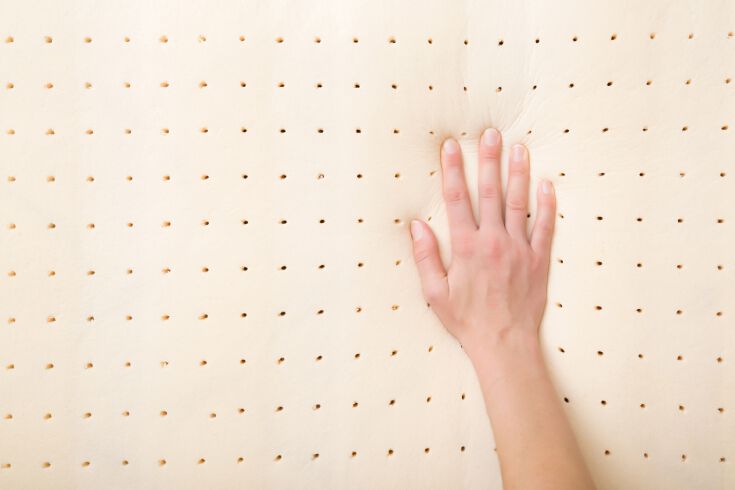

Natural latex comes from the milky sap of the rubber tree. Synthetic latex is made from petroleum-based chemicals, and blended latex mixes the two. Natural latex is valued for its springy feel and generally costs more. Synthetic is made to be consistent and generally costs less.
| Natural | Blended | Synthetic | |
|---|---|---|---|
| Made from | Rubber tree sap, whipped into foam and cured | A mix of natural and synthetic latex, widely used in mattresses | Man-made rubber, commonly styrene-butadiene rubber (SBR) |
| How it feels | Valued for its elasticity | Depends on the mix | Often described as a little less springy |
| Consistency | Depends on the maker | Depends on the mix | Made to be consistent from batch to batch |
| Price | Generally costs more | Generally less than natural | Generally less than natural |
| Where it comes from | Plant-based, tapped from trees | Both sources | Petrochemicals |
Dunlop and Talalay Are Processes, Not Sources
Dunlop and Talalay describe how liquid latex becomes foam. They do not describe where the latex came from. Either process can use natural, synthetic or blended latex, so "Talalay" on a label tells you nothing about whether the rubber was tapped from a tree.
Dunlop latex is poured and baked in one step, and it tends to be denser and firmer-feeling. Talalay adds vacuum and freezing steps. That gives a lighter, more even foam that often feels softer and bouncier. So every latex layer raises two separate questions: which process, and which material.
How They Feel and Hold Up
Latex has a feel of its own, and the type of latex shapes it only partly.
Against memory foam
Latex pushes back and springs back quickly, so you tend to feel lifted on top of it. Memory foam mattresses give a slow sink instead.
Springiness
Natural latex is valued for its elasticity. Synthetic latex is often described as a little less springy.
Consistency
Synthetic latex is made to be consistent from batch to batch. That suits a shopper who wants a predictable feel.
Durability
Natural latex has a reputation for lasting well. How long any latex layer lasts also depends on its density, its thickness and the rest of the mattress.
Weight
Latex is heavy. A mattress with a lot of it takes more effort to move, rotate or carry upstairs. Some mattresses in the Mancini's Sleepworld lineup put latex layers over coils, so look among the hybrid mattresses.
Smell
New latex can have a rubbery smell at first. It fades as the room airs out.
How to Read a "Natural Latex" Label
The word "latex" on its own does not say which kind is inside. Even "natural latex" may describe only one layer, or a blend. These steps work best with the actual mattress in front of you.
- Ask whether "natural" describes every latex layer. A mattress can pair a natural latex layer with other latex or other foams.
- Ask for the natural content of each layer. Blends contain natural latex too, so ask how much of each layer is natural and how much is synthetic. At a Mancini's Sleepworld location, ask a Sleep Specialist to pull up the maker's specifications for the latex layers.
- Read the law label. In California, the law label on a mattress must list the kinds, types and percentages (by weight) of its filling materials, in order of how much of each there is. Ask a Sleep Specialist to show you this label on the mattress you are testing.
- Check what any certification covers. Ask which certifications apply and to which part of the mattress: the latex, the cover, or something else. The table below shows what each one says.
- Compare the finished mattress, not the badge. Content and certifications describe materials. Feel and support come from the whole build.
What the Certifications Cover
Each of these certifications covers one part of the story, and none of them tells you how a mattress feels.
| Certification | What it covers | What it does not tell you |
|---|---|---|
| GOLS | The Global Organic Latex Standard, originally developed by Control Union, recognizes products made from organically grown natural rubber latex. | How the mattress feels. "Organic" is about how the rubber was grown, which is a different claim from "natural". |
| GOTS | The Global Organic Textile Standard certifies textiles made with organic fibers, such as a mattress cover. | Anything about the latex. It is a fabric certification, not a latex one. |
| OEKO-TEX STANDARD 100 | A label for textiles tested for harmful substances. | Whether a material is natural or organic. It is a test result, not a statement about the source. |
Trying Latex Before You Buy
Mancini's Sleepworld carries many brands under one roof at 50+ locations across Northern California. The full mattress lineup includes mattresses with latex layers from several makers. At a Mancini's Sleepworld location, you can compare the latex constructions on the floor side by side instead of trusting one brand's "natural" wording. You can also feel latex's push-back next to memory foam's slow sink, which no label can tell you.
- Settle the feel level first. The comfort guide explains firmness levels. Compare latex options around that level.
- Ask which models use latex. There is no separate latex category, so a Sleep Specialist can point you to the mattresses with latex layers.
- Lie down in the position you really sleep in for several minutes. A hand press or a quick sit on the edge will not tell you much.
- Try two options a step apart in feel, then go back to the first.
- Bring your own pillow, and if you share the bed, test together.
Which Latex Fits You, and What to Do Next
Feel and support come first; the latex type comes second. Find your row.
| If you | Lean toward | Your next move |
|---|---|---|
| Want plant-based material and a springy, elastic feel, and the price fits your budget | Natural latex | Ask the maker how much natural and synthetic latex is in each latex layer; use the law label to check the listed filling materials |
| Want a consistent latex feel and would rather spend less | Synthetic or blended | Ask how much of each layer is natural and how much synthetic, so you know what the price reflects |
| Care more about the latex feel than where it comes from | Synthetic or blended | Lie on a Dunlop and a Talalay build too: the process shapes the feel as well |
| Want organic, not only natural | Natural latex with GOLS | Ask which part of the mattress the certification covers |
| Aren't sure you want latex at all | No type yet | At a location, lie on a latex build next to memory foam to feel push-back against slow sink |
| Share a home with someone who has a latex allergy | Their doctor's advice first | Latex is made from the sap of rubber trees, and a latex allergy is a reaction to it, so ask their doctor before choosing a latex mattress |