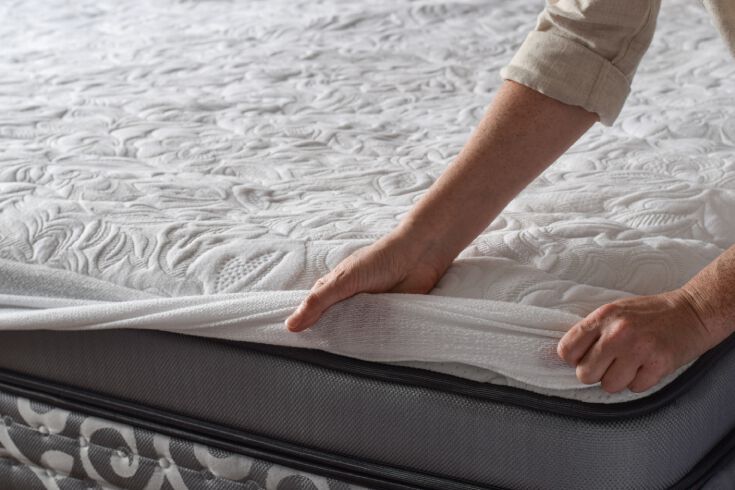

A transition layer is the in-between layer in a mattress. It is firmer than the soft comfort layer on top and softer than the support core underneath. It makes the change from cushioning to support gradual, so you sink in comfortably without dropping onto the coils or the dense base foam.
| Layer, top to bottom | In an all-foam mattress | In a hybrid | What it does for you |
|---|---|---|---|
| Cover and quilting | Fabric cover, sometimes quilted with foam | Fabric cover, sometimes quilted with foam | The first touch of the surface |
| Comfort layer | Soft foam, such as memory foam | Soft comfort foams | Lets you sink in and feel cushioned |
| Transition layer | A firmer foam between the comfort foam and the dense base | Foam or small wrapped microcoils between the comfort foams and the coil unit | Steps the feel from soft to supportive and keeps you off the core |
| Support core | A thick, dense base foam | A coil unit | Holds you up once you press through the layers above |
- Cover and quilting
- Comfort layer
- Transition layer
- Support core
What a Transition Layer Does
A transition layer does four jobs, and each one changes how the bed feels to you.
It grades the feel
Layered beds place softer material near the body and firmer layers beneath to stop you sinking too deep, as research on layered foam describes. The transition layer sits in the middle of that sequence, so the feel steps from soft to supportive instead of changing all at once.
It keeps you off the core
In memory foam mattresses, it sits between the comfort foam and the dense base. If it is too soft or thin for you, a hip or shoulder can sink through and meet the firm base. In hybrid mattresses, it sits above the coil unit and keeps you from feeling the coils through the top.
It sets how deep you go before support takes over
Your weight and position decide how far you press into the stack. A lighter sleeper may barely reach the transition layer. A heavier sleeper, or a hip when you lie on your side, presses into it and toward the core. That is why two partners can feel the same bed differently.
It shapes the character of the feel
Memory foam was first called "slow spring back foam". It flows to match your body and returns to its shape once the pressure is off. A slow in-between layer adds to that hug. A quicker one, such as polyfoam, latex or microcoils, pushes back sooner. In a hybrid, this layer also changes how much of the coils' spring reaches the surface.
Stuck, Floaty or Feeling the Coils? What the Layers Tell You
Your complaint about a bed often points to the layers. Use it to choose what to try next.
| What you notice | What the layers may be doing | What to compare next |
|---|---|---|
| You sink slowly and feel stuck when you try to move | A slow-recovering top over a slow in-between layer | A bed with a quicker-responding in-between layer |
| You float on top and never settle in | A thin or quick top layer | A slower or deeper top |
| You feel the coils or a hard base at your hips or shoulders | You are pressing through the top and in-between layers for your weight or position | A firmer or more substantial in-between layer, or a firmer comfort level overall |
| It feels soft at first, then support arrives late | A soft top over a soft in-between layer | A firmer in-between layer |
| It feels right for one partner and wrong for the other | Different weights reach different depths in the stack | A support level for each partner from SleepMatch, then beds tested together |
On a bed you already own, check the base before you blame the layers. A base that sags or flexes, or that lacks the middle support the maker calls for, can make a mattress feel like it is giving way. You can compare options among foundations and bases. Note where and in which position you feel the coils, then talk it through with a Sleep Specialist.
If pain is why you are shopping, that is a question for your doctor.
How to Spot a Transition Layer on a Spec Sheet
Four steps find the transition layer in a layer list.
- Find the top and the bottom. The layers just under the cover are the comfort layers. The bottom is the core: a coil unit, or a thick base foam.
- Treat whatever sits between them as the transition. Spec sheets use many names for it: transition layer, transition foam, support foam, or a brand's own name for a foam. Mancini's Sleepworld carries many brands, so the same in-between layer appears under different names across the full mattress lineup. Some listings include a construction note that walks through the layers from the top down. Some name a transition layer outright. Others describe a foam doing the same job under the brand's own name. If you are weighing two mattresses, ask a Sleep Specialist to walk you through both layer lists side by side.
- Read the material for a hint of the feel. Memory foam leans toward a slower hug. Polyfoam, latex and microcoils lean toward a quicker push-back. Foam makers measure a foam's density and its firmness, using an indentation test written IFD or ILD. Both shape how a foam supports and feels.
- Note what is not listed, and ask. Listings vary in detail. Some give a layer's thickness or foam density, and others only name the layers. If a listing does not say what a layer is made of, a Sleep Specialist can help you find out.
Does a Thicker or Extra Transition Layer Mean Better or Longer-Lasting?
A thicker layer does not mean a longer-lasting mattress on its own. Thickness tells you how much material there is. It does not tell you what the material is or how it is tuned, and a thicker layer also changes the feel. Research on layered foam cushions finds that the choice and order of foams play a significant role in long-term durability, and that denser foams typically show less permanent compression. The whole mattress wears together, along with the base under it and the weight it carries each night.
More layers do not automatically give you more value either. Extra layers, and materials such as latex, microcoils or denser foams, can add to what a mattress costs. The price reflects the whole build and the brand, though, not one layer. Here is a simple value test: if you cannot tell two beds apart while lying in your own position, the extra layer is not earning its cost for you.
Adding a layer yourself is not the same thing. Mattress toppers add cushioning on top: they change how the surface feels, not the support underneath, so a topper cannot stand in for a transition layer or firm up a core you are sinking through.
Ask a Sleep Specialist these three questions:
- What is each layer in this mattress made of?
- Is the foam density listed for these layers?
- What is different between these two builds that I would actually feel?
How to Feel a Transition Layer in a Store
You can run this test at a Mancini's Sleepworld location in one unhurried visit.
- Hold firmness steady. Mancini's Sleepworld's comfort guide groups mattresses as Extra Firm, Firm, Medium Firm and Soft. Ask a Sleep Specialist for an all-foam and a hybrid at the same level. With firmness roughly matched, more of what you feel comes down to the layers, though covers and edges still differ.
- Lie still in your real sleep position for several minutes. Bring your own pillow. Memory foam softens with body heat, which lets it shape to your body, so give it time before you judge it.
- Shift your weight. Roll from your back to your side and back again, then sit up in the middle of the bed. Notice whether support arrives gradually or with a bump.
- Notice how quickly the surface follows you. Then move to the other build, and go back to the first one.
- If you share a bed, test alone and then together. Each of you reaches a different depth in the stack, so both views count.
Does the Transition Layer Matter for You?
It matters most when you press deep into the stack: a heavier sleeper, a hip or shoulder when you lie on your side, or a couple whose weights reach different depths. What counts is whether the change from soft to supportive feels gradual to you, not whether a separate layer is listed; some mattresses go straight from the comfort layer to the core, and in others the lower comfort layers do the same job. If you are a lighter sleeper who barely reaches the in-between layer, the comfort layer on top shapes more of what you feel, and the transition layer matters less.