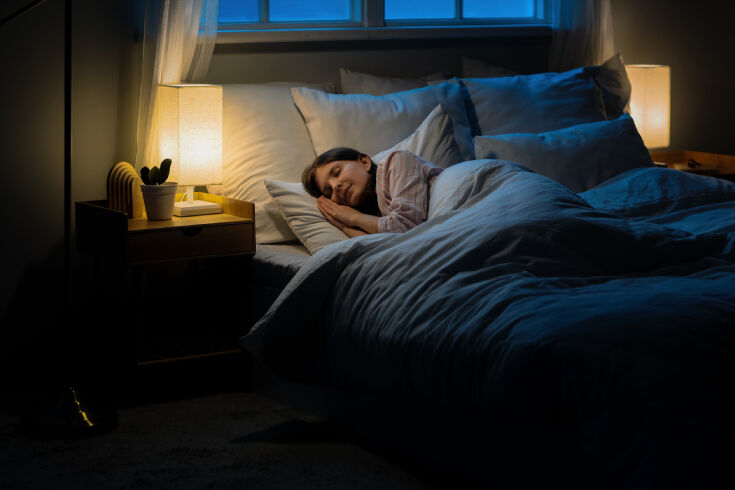

To improve your sleep, start with the room. Health bodies describe a bedroom that's cool, dark and quiet, a steady sleep schedule, and bright screens kept away before bed.
Then change one thing at a time, starting with what costs nothing and can be undone. Keep short notes each morning. That way you'll learn whether the mattress is really the problem before you spend anything on it.
What You Notice, and Where to Look First
| What you notice at home | The cheapest suspect to rule out first | What points at the mattress itself |
|---|---|---|
| Waking hot or sweaty | Room temperature and the bedding stack: covers, protector, pad | You're still hot with a cool room and light bedding |
| Lying awake at the start of the night | Light, screens, noise and your schedule | Rarely the mattress on its own |
| Waking stiff, or feeling pressure at the shoulder or hip | Pillow height, then the layers on the surface | The same spots every night, and not on other beds |
| Rolling toward a dip or the middle | The base, slats and frame | A dip that stays with nobody on the bed |
| Woken by a partner's movement, heat or snoring | Separate covers, bed width, and the snoring warning signs | Movement you feel across the bed with every turn |
| Sleeping better in a hotel or guest bed | A clue only, since the room, schedule and stress changed too | Consistently better sleep on another bed at home |
What Good Sleep Quality Looks Like
The CDC describes quality sleep as uninterrupted and refreshing. It says good sleep is "not just about how many hours you sleep, but how well you sleep."
Its signs of poor sleep quality are:
- trouble falling asleep
- repeatedly waking up during the night
- feeling sleepy or tired even after enough sleep
For adults aged 18 to 60, it recommends "7 or more hours" a day. If daytime tiredness brought you here, see whether a new mattress can improve your daytime energy and focus.
If a low tracker score started your search, it doesn't judge your mattress. The American Academy of Sleep Medicine covered this in its 2018 position on consumer sleep trackers. It said they "are not substitutes for medical evaluation." It also said their data "may be utilized to enhance the patient-clinician interaction."
Whatever a particular device is cleared to do, a sleep score can't diagnose a sleep disorder. It can't tell you whether the mattress is at fault, either. Treat the score as one more note, and bring it to a clinician if it worries you.
Set Up the Room First
Several health bodies describe the same bedroom basics, from a cool sleeping temperature to a dark, quiet room. You can try each one tonight.
| Factor | What health bodies say | What to try |
|---|---|---|
| Temperature | The NHLBI recommends a cool bedroom. The AASM says to keep the room "at a comfortable, cool temperature." | Lighter covers, a fan, or air conditioning if you have it. On smoky days, the California Air Resources Board says to stay indoors with windows and doors closed. So cool the room another way. |
| Light | The NHLBI says to keep the bedroom dark. It adds that a dim night light is fine. | Curtains that block light, or an eye mask. |
| Noise | The NHLBI and the AASM both call for a quiet bedroom. The AASM notes that "noise, light or temperature can affect sleep." | Earplugs, or a steady background sound to mask noise. |
| Schedule and screens | The NHLBI recommends the same bedtime and wake time every day, weekends included. It warns that bright light from a TV or computer screen before bed "may signal the brain that it's time to be awake." | Pick a wake time you can keep all week, and put screens away before bed. |
| A shared bed | The AASM says "sleeping with a bed partner who snores also can cause sleep disruption." | Separate covers, so each of you sets your own warmth. Write down any snoring you hear. |
Check the Bed Before You Blame the Mattress
Several parts of the bed can feel like a mattress problem. Each one is quick to check.
The base
Take the mattress off. Look for a sagging box spring, broken or bowed slats, a missing center support or a bent rail. Fix the base, or look at foundations and bases, before you judge the mattress.
The dip
Strip the bed and look at the surface with nobody on it. Then lie in your usual spot and in one nobody uses, and compare.
The pillow
A pillow that suited an older or firmer surface may sit too high or too low on this one. Check your pillows too.
The layers
Count every layer as part of the bed, from mattress protectors to pads and toppers. Each one changes how the surface feels.
The space
On a bed too narrow for two, you'll feel each other more when either of you moves.
No fixed age says a mattress is done. Its condition decides. These signs point at the mattress when they show up together:
- a dip that stays with nobody on the bed
- rolling toward a low spot once the base is ruled out
- consistently better sleep on another bed
How a mattress wears depends on its materials, construction, base and use.
Test One Change at a Time
If you change several things at once, you can't tell which one helped. One change at a time shows you.
- Begin with the free, reversible changes. The room and the bedding stack come before anything you buy.
- Give each change several nights. Keep it in place long enough to judge, then decide whether it stays.
- Write a few lines each morning. A sleep diary, as the CDC describes it, records when you go to bed, wake in the night and get up. It also covers naps, exercise, alcohol, caffeine and medications. Add what you changed and one line on how you felt. If you share the bed, you both keep notes. The NHLBI suggests sharing them with a healthcare professional.
- Move to the pillow or a layer next. Still one at a time: swap the pillow, or take a pad off, and note what happens.
- Sleep a night or two on another bed. Use a guest room or any other bed you can get to. Treat the result as a clue, since the room, schedule and stress may change along with the bed.
- Look for the pattern. Compare what changed on the better nights with what stayed the same on the worse ones.
If Your Notes Point at the Mattress
The cheapest useful fix is the one that matches what your notes found. A topper changes the surface feel, not the support underneath, so it can't fix a sag.
A new mattress can't fix a room, schedule or medical cause either. Buy one before you've checked those, and you risk paying for the wrong fix.
When the support itself is the suspect, take your notes to a Mancini's Sleepworld location, one of 50+ locations across Northern California. Lie on two or three options in the position you really sleep in. Bring the other sleeper so you both test it.
Pressure at the shoulder or hip
→ compare how far you sink and whether the surface gives where you're widest. With many brands on one floor, you can compare different constructions side by side, instead of relying on each brand's own firmness label.
A partner's movement
→ on each finalist, one of you gets in and out while the other lies still and says what they feel. Some constructions pass less movement across the surface than others. So test it on the bed, rather than assume it from the type.
Heat that stayed after the room and bedding changes
→ ask what's inside each bed you like, and look at mattresses grouped for hot sleepers.
Your Next Step
Your notes will lead you to one of five next steps:
If one room or bedding change made the difference
Keep it. The mattress may be fine as it is.
If the pillow or the surface feel changed things
Try a smaller fix first: a new pillow or one of the mattress toppers. A Sleep Specialist can go through your notes with you and help you weigh a surface change against the mattress itself. They can also show you toppers and pillows alongside mattresses.
If the base or frame was the problem
Fix it first. Then give the bed a few more nights before you judge the mattress.
If the dip, the pressure or a partner's movement stays after the room, bedding, pillow and base are ruled out
The mattress is the likely suspect. Compare your notes with the signs you chose the wrong mattress firmness. Then shop the full mattress lineup for that specific thing, and test each option for exactly what your notes found.
If nothing in the room or bed explains it, or you notice warning signs
Take your notes to a healthcare provider. The NHLBI lists breathing that starts and stops, frequent loud snoring, gasping for air and daytime sleepiness as sleep apnea symptoms. Someone else may notice them before you do. The CDC says to talk to your provider if you regularly have problems sleeping.
Start tonight with one free change to the room, and write your first note tomorrow morning.