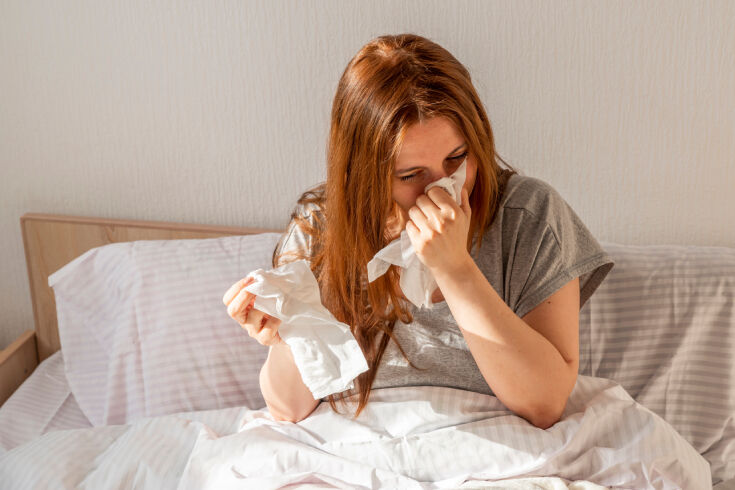

The right mattress for allergies or asthma is one that fits your body and can live inside a full zippered cover. The dust-mite advice from the NIEHS, EPA, AAAAI and ACAAI is about covering, washing and keeping the bedroom dry.
It isn't about what the mattress is made of. So run these five checks on any mattress you're considering.
Table of Contents
- What Allergy and Asthma Groups Advise for the Bedroom
- Encase and Clean First, or Replace?
- Choosing the New Mattress
- Is an Allergy Label Worth Paying More For?
- Latex, New-Mattress Smell and Children's Beds
What to Check on Any Mattress in an Allergy or Asthma Household
| Check | Why it matters | How to check it before you buy |
|---|---|---|
| A full cover fits | Encasements are sized to a mattress's dimensions and depth. The AAAAI advises encasing box springs as well as mattresses. | Note the mattress's size and depth. Check whether your box spring or foundation can be covered too. |
| How it feels with a cover on | A cover sits between you and the mattress, so it changes what you actually lie on. | Test each mattress knowing a cover will go on top. |
| What's inside | This matters if you have a known sensitivity, such as latex. | Ask to see the California law label. Ask the maker about anything it doesn't show. |
| Care | A cover only helps while it stays clean and sealed. | Ask what the maker says about the mattress's own cover. Read the encasement's care label. |
| Comfort and support for each sleeper | Any comfortable mattress can be encased, so the choice comes back to feel. | Lie on it in your real sleep positions at a Mancini's Sleepworld location, with your partner there if you share the bed. |
What Allergy and Asthma Groups Advise for the Bedroom
The NIEHS says dust mites "cannot be completely eliminated," but you can reduce their numbers. Here are the room-wide steps the groups describe:
Know where mites live
The NIEHS says dust mites are microscopic and feed on dead skin shed by people and pets. They "can live in mattresses, bedding, upholstered furniture, carpets, and curtains." The EPA adds that "every home has dust mites."
Cover the bed
The AAAAI advises encasing mattresses, box springs and pillows in allergen-proof fabric covers or airtight, zippered plastic covers. It notes that comforters and pillows you can't wash regularly can go in allergen-proof covers too.
Wash bedding every week
The EPA advises washing bedding in hot water once a week and drying it completely. Use hot water as each item's care label allows.
Keep the air drier
The EPA suggests indoor humidity "ideally between 30-50% relative humidity." You can check it with a hygrometer from a hardware store, it says. The NIEHS points to a dehumidifier or air conditioner.
Keep pets out of the bedroom
The ACAAI advises keeping pets out of the bedroom of the person with allergies. The NHLBI suggests keeping furry pets out of the home or bedrooms if fur triggers symptoms.
Clean at the right time
Cleaning can stir up dust. The ACAAI suggests cleaning when the person with allergies is away, and not cleaning their bedroom at night.
Freeze or swap what you can't wash
The NIEHS suggests freezing non-washable bedding overnight. It also suggests replacing wool or feathered bedding with synthetic.
Covers and other anti-allergy bedding are one step among these, not a fix on their own. For asthma linked to dust mites, the NHLBI's 2020 asthma guideline recommends mattress and pillow covers only as part of a multi-step plan. It doesn't recommend them as a single step.
Encase and Clean First, or Replace?
Replace the mattress when there's a reason to, not because of a material label.
| If this is you | Start here |
|---|---|
| Symptoms seem worse in bed, but you don't know the trigger | Start with your doctor or an allergist. The ACAAI says an allergist often needs a skin test to find exactly what's triggering a reaction. The NIEHS says that if you suspect a dust-mite allergy, you can see your doctor and get tested. |
| A dust-mite allergy is confirmed, and the mattress is still comfortable and sound | Run the full set of steps above before you buy anything. Start with covers for the mattress, box spring and pillows. |
| The mattress got soaked and didn't dry, or shows mold | The EPA says to dry water-damaged items within 24 to 48 hours to prevent mold. Porous materials may have to be thrown away if they become moldy, it says. The AAAAI says to throw away moldy items that can't be cleaned and dried. |
| The mattress sags or is uncomfortable anyway | Replace it for comfort, and cover the new one from the first night. |
| Someone in your home has a latex allergy | Read the latex question below before you choose a latex mattress. MedlinePlus notes that latex is made from the sap of rubber trees. |
Keep an eye out for the signs the NHLBI lists that asthma might be getting worse. They include symptoms more often, needing reliever medicine more often, or waking at night from coughing. Those go to your doctor and your asthma action plan, not to a mattress change.
Choosing the New Mattress
Choose for your body first. Then make sure a cover fits.
- Bring what you know. Write down the known triggers (yours, or your family member's) and anything a doctor advised. Check each mattress against that list.
- Shortlist by position and feel. Start from the full mattress lineup. Then lie on two or three options together at a Mancini's Sleepworld location, one of 50+ across Northern California. If you share the bed, you and your partner may want different feels. Mancini's Sleepworld sets out firmness levels in their comfort guide, which helps two sleepers compare.
- Compare constructions side by side. Mancini's Sleepworld carries many brands under one roof, so latex, memory foam, innerspring and hybrid options sit next to each other. The health bodies cited here give their advice as covering, washing and humidity. None of them names a mattress material. Any of these types can go inside a full cover, so choose by feel and support. The one exception is a latex allergy, covered below.
- Read the law label. Ask to see it on each mattress you're considering. In California, the law label lists the kinds and percentages of filling materials by weight, in generic terms. It isn't a layer map, so ask the maker about anything it doesn't show.
- Confirm a full cover fits. Ask a Sleep Specialist which mattress protectors or encasements fit the size and depth of the mattress you're considering. Ask whether the base can be covered too.
- Judge the feel with the cover in mind. A waterproof or tightly woven cover can change how the surface feels. It can also change how the bed sounds when you move and how warm it sleeps. If you already sleep hot, look at mattresses for hot sleepers as well.
Is an Allergy Label Worth Paying More For?
A mattress's price follows its materials, construction and features. Words like "hypoallergenic," "antimicrobial" or "dust-mite resistant" are questions to put to the maker. What does the term mean, and what was it tested for?
Whatever the answer, the steps the health bodies describe apply to any mattress you choose. So weigh the extra cost against comfort and support first.
An encasement only works while it seals. Check the zipper and seams when you put it on and each time you wash it, and follow its care label. Replace it if it tears, because a split seam or broken zipper leaves a gap.
Latex, New-Mattress Smell and Children's Beds
Someone in the home has a latex allergy. Is a latex mattress out?
Ask that person's doctor before you choose a latex mattress. MedlinePlus says latex is made from the sap of rubber trees, and that "a severe latex allergy can affect breathing."
Read the law label on every mattress you consider. It doesn't separate natural from synthetic latex, so ask the maker for that detail.
Symptoms started after a new mattress arrived. What now?
Note when the symptoms happen, and tell your doctor. The EPA lists building materials and furnishings among indoor sources of volatile organic compounds.
It advises increasing ventilation when you use products that emit them. So open the windows and air out the room.
My child has asthma. Is anything different for their bed?
The same steps apply to your child's mattress and pillows: covers, weekly hot washing and drier air. The EPA also advises choosing stuffed toys you can wash.
Your child's doctor and asthma action plan come first. The NHLBI says to follow that plan to know what to do and when to call 9-1-1.
Your next step: take your trigger list to a Mancini's Sleepworld location and test each mattress on your shortlist, knowing a cover will go on top.